Adaptive Driving After Brain Surgery: The Hidden Costs of Neurological Disability
For those who have been wondering, I have a status update on the driving-front. But first, a quick recap.
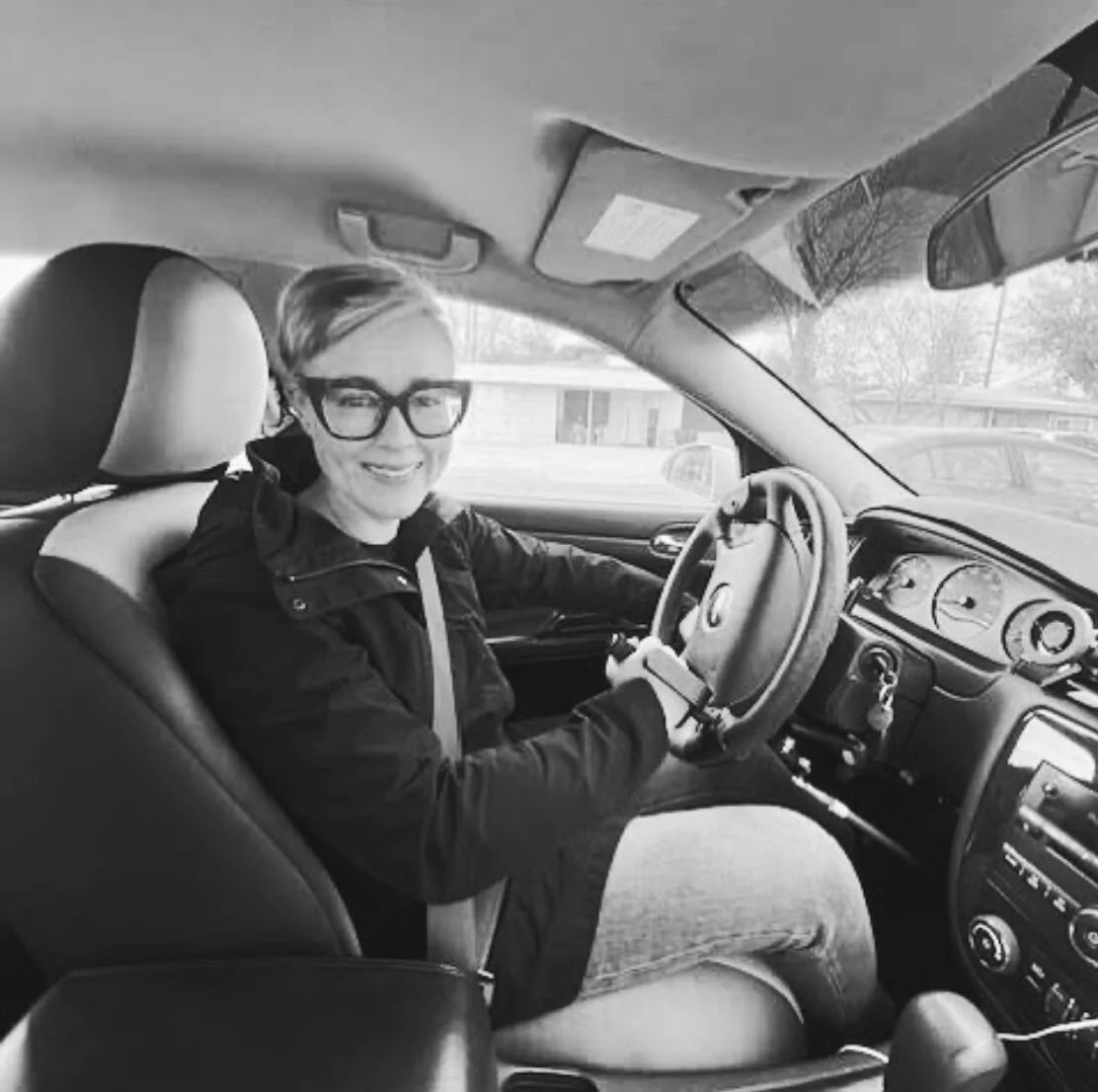
Liz Salmi ready to drive to school.
After my most recent surgery in 2022, my right foot stopped landing where I expected it to. I'd been cleared by my medical team to drive, but when I got behind the wheel, I couldn't reliably find the space between the gas and the brake. After a few near misses, I voluntarily stopped driving, even though I needed a car to get to appointments, run errands, and maintain any semblance of normal life.
What followed was a 14-month process I've been wanting to blog about in more detail (but I had to hold off for reasons explained below).
I worked with a certified driver rehabilitation specialist (one of only ~350 in the entire country) who discovered my proprioceptive losses extended from my foot up through my right hand and arm. I was fitted for hand controls: left hand for gas and brake, right hand with a pocket grip for steering. I practiced in my instructor's car for months, then coordinated competitive bids among three equipment installers to retrofit my own vehicle. The whole thing cost $10,800 out of pocket. None of it was covered by insurance.
Earlier this year, I wrote about this experience for the journal Neuro-Oncology Practice. The article is behind a behind a paywall, but I shared screenshots on LinkedIn so you can read it, and the DOI is here too for anyone with journal access. The piece makes the case that adaptive driving assessment and rehabilitation should be treated as part of standard neuro-oncology survivorship care, not as an elective luxury. Patients who can't access these resources don't just lose independence; they may keep driving unsafely because they have no other choice. (I had to wait until the article was published before I could talk about it here on the blog.)
Here's something I couldn't fit in the journal piece due to word limits: getting back on the road is making the next phase of my life possible.
I wrote last fall about going back to school. What I didn't say explicitly then is that I couldn't have committed to that decision without knowing I could physically get there. This fall (September 2026, exactly 19 years after my first brain surgery!) I'll start at UC Davis. The car that took 14 months and nearly $11,000 to make drivable is the same car that will take me to my first class.
I don't know if there will be a fifth surgery. But I know that every time I get in that car, I'm not just driving somewhere. I'm driving toward something.
